 4.7 Google Rating
Adding a bathroom in a basement often requires more than just installing fixtures. Because basement plumbing is typically below the main sewer line, a sewage ejector pump is needed to move wastewater up and out of the home.
For this project, we installed a sewage ejector pump and the underground plumbing required to support a new basement bathroom. Work like this starts below the surface, where the existing concrete must be opened to access and install the necessary piping.
Opening the Floor and Installing Underground Plumbing
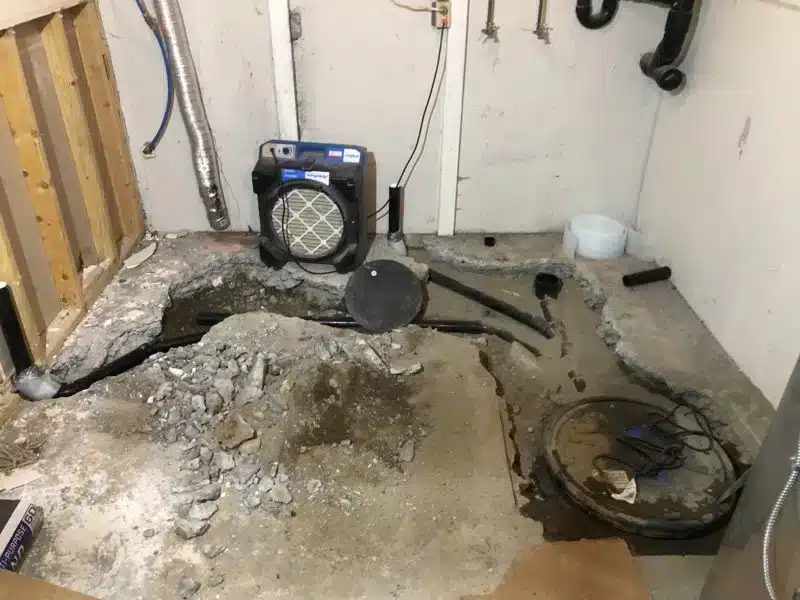
The first step involved breaking and removing a section of the basement concrete to expose the area where the new plumbing system would be installed. This allows space for the ejector pit and the drain lines that will carry wastewater from the new fixtures.
Once the area was prepared, the underground plumbing was installed and connected to the ejector pump system. Proper layout and connections are important to ensure reliable performance once the bathroom is in use.
Projects like this are part of larger plumbing work often associated with remodeling and plumbing system installations, where both new and existing systems need to work together properly.
Restoring the Concrete Surface
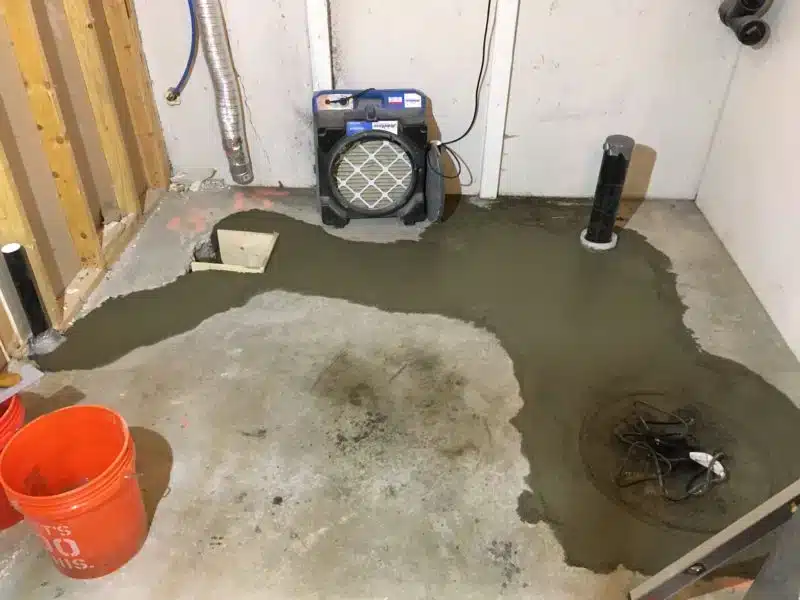
After the plumbing system and ejector pump were installed, the concrete floor was restored to bring the basement back to a clean, usable condition. This step helps ensure the space is ready for the next phase of the bathroom addition.
With the underground work complete, the foundation is now in place for the rest of the bathroom buildout.
If you are planning a basement bathroom or need plumbing installed below grade, call (208) 999-7788 to schedule service.