 4.7 Google Rating
A slow faucet can feel like a water pressure problem, but the cause is often much smaller. In many cases, the restriction is sitting right at the tip of the faucet.
The small screen that can slow everything down
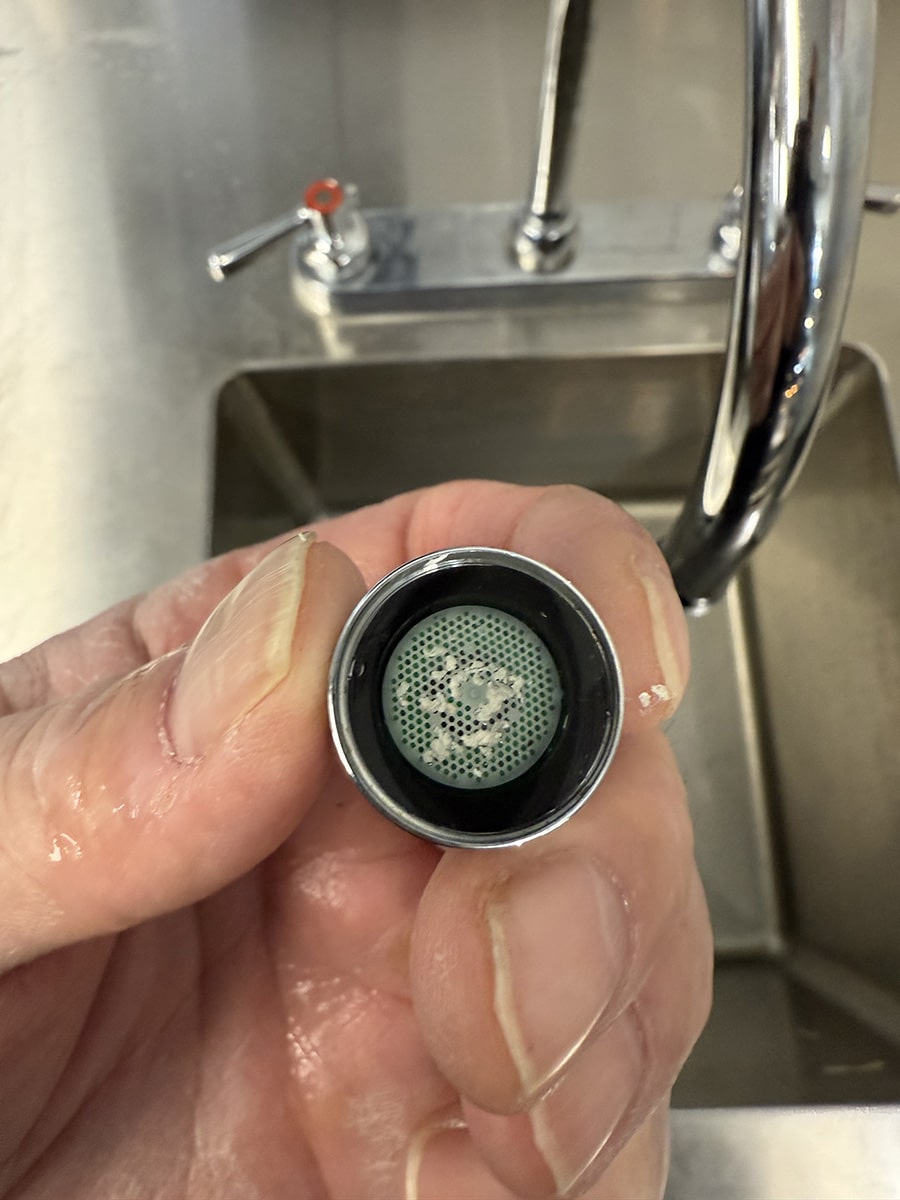
The aerator is the small removable piece at the end of the faucet spout. It helps shape the water stream, but it also catches debris, sediment, and mineral buildup as water passes through.
The dirty aerator in this photo shows how quickly that buildup can affect flow. Even if the plumbing system has normal pressure, a clogged screen can make one faucet run weak or uneven.
For homes that deal with repeated mineral buildup, water quality may be part of the bigger picture. Scott’s Plumbing offers water filtration options for homeowners who want to reduce sediment and hard water issues throughout the home.
A quick way to narrow it down
If only one faucet is running slow, compare it with nearby fixtures. If the shower, tub, or another sink has normal flow, the aerator is a good first place to check.
- Weak flow at one faucet may point to the aerator.
- Low pressure at several fixtures may point to a larger plumbing issue.
- Flow that changes suddenly may be related to debris moving through the line.
Cleaning or replacing the aerator
Many aerators can be unscrewed, rinsed, and cleaned. If the screen is packed with mineral buildup or damaged, replacement may be the better option.
This is a simple step, but it can save time by ruling out an easy fix before looking deeper into the system.
When the problem is not at the faucet tip
If cleaning the aerator does not restore flow, the restriction may be in the faucet cartridge, shutoff valve, supply line, or plumbing feeding the fixture.
Issues like these often fall under fixture repair and installation work, especially when the faucet itself needs to be serviced or replaced.
For help diagnosing low water flow, call (208) 999-7788. You can also use the contact form to schedule service.